
What is solarpunk? The optimistic future, and what is already real
Solarpunk imagines a future where clean energy, nature and community fit together. It began as a 2008 blog post and became an art, fiction and design movement. Here is what it means, what is already real, and where it falls short.
In this story
Solarpunk is a way of imagining the future in which clean energy, nature, technology and community fit together. It is fiction, art and a design attitude, and some of it is already being built.
Most pictures of the future we are shown are grim: burnt landscapes, glass-and-neon dystopias, cities that have swallowed the sky. Solarpunk asks a different question. What if the future looked like a place you would want to live?
I care about this because I think what we picture shapes what we build, and because a mind that is tired of bad news needs somewhere to point itself. This post explains the idea plainly, tells you where it came from, and is honest about what it is and is not.
Where the word came from
The word appeared in a blog post called From Steampunk to Solarpunk, published on the Republic of the Bees blog on 30 April 2008. The anonymous author looked at steampunk, which retells the Victorian age of steam with fantastic machines, and asked what a genre would look like that was set in a world run on wind and solar. The post discussed a cargo ship partly pulled by computer-controlled kites, and imagined a world where sails and solar had replaced fossil fuel in the way steam once replaced sail.
The idea spread slowly. In 2014 a widely shared Tumblr post by a writer known as Miss Olivia Louise helped set the look and feel of the aesthetic, and since then it has grown into a mixture of illustration, short stories, architecture and community projects.
What it looks like
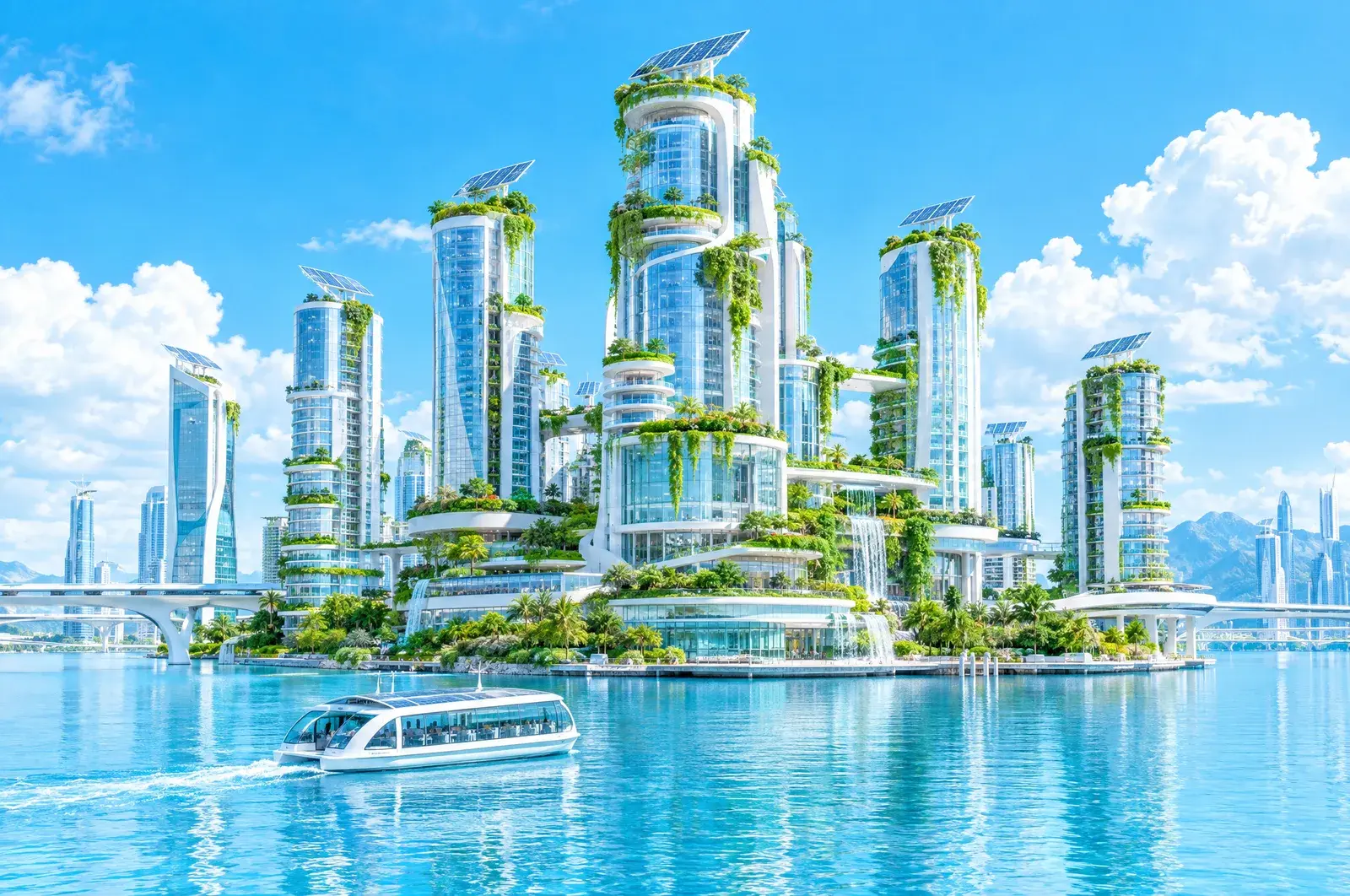
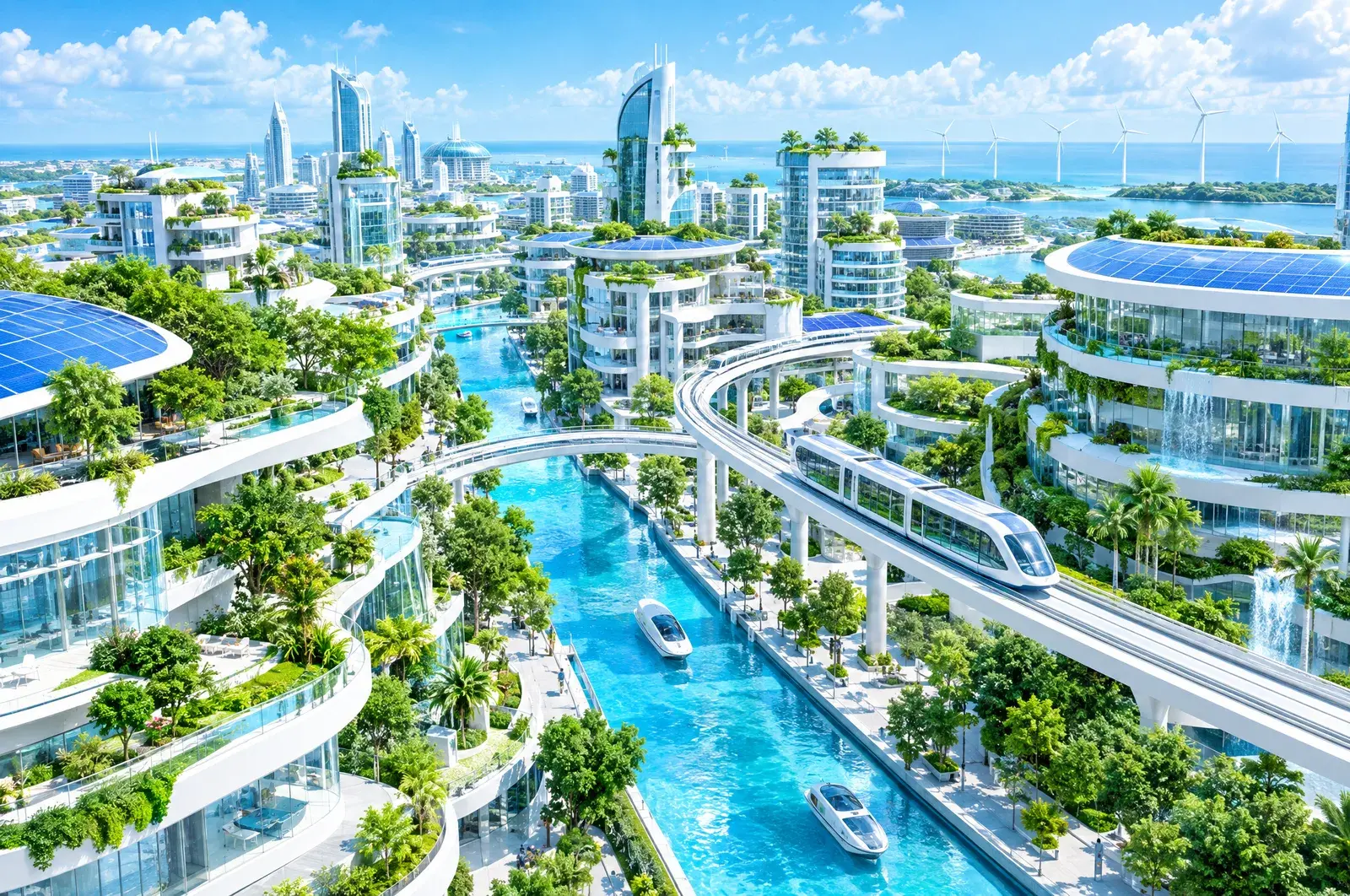
Picture a city with:
- rooftops and walls covered in plants and solar panels
- water running through open channels, not hidden in pipes
- trams, bikes and walking paths taking the place of car lanes
- workshops and repair cafes where things get fixed
- shared gardens where neighbours grow food
- lots of glass, light and curved shapes, built from local materials
That is the picture. It is deliberately hopeful. The "punk" part means the will to build something different from the default, rather than any particular politics.
What is already real
This is the part I like most. Look at the list above and you can point to real places and real numbers.
- Solar is now the cheapest new electricity in many places. The International Renewable Energy Agency reported that the global average cost of electricity from utility-scale solar was about $0.043 per kilowatt-hour in 2024, roughly 90% below 2010. I go through the numbers, and their limits, in solar is now the cheapest electricity.
- Home solar is arriving for renters and flat-owners. Plug-in solar kits became legal in the UK on 27 August 2026. See plug-in solar and home energy.
- Some cities already run the way the pictures show. Solarpunk cities that already exist covers Freiburg's Vauban district, Copenhagen's bicycles and Medellín's green corridors.
- Building with earth is old and coming back. See new earth building.
- Growing food in cities is happening, with some caution about the hype (see growing food in cities).
None of these is a fantasy. Each is a real technology or a real place. The picture is a mosaic of things that exist, put together in a way that has not yet happened in any single city.
The Frutiger Aero connection
If you grew up in the 2000s, the glass, water, bubbles and blue skies of the era's software and adverts will look familiar. That style, later named Frutiger Aero, was a picture of an optimistic future too: technology that was friendly, clean and close to nature. It faded after about 2013, and I think it is remembered fondly partly because that picture of the future was never delivered. I trace the timeline in the Frutiger Aero timeline. The two ideas are close cousins, and I use both as the visual language of this site on purpose.
What solarpunk is not
I would like to be careful here, because hopeful movements attract both hype and cynicism.
- It is not a political party or a plan. People with very different politics call themselves solarpunk, and they disagree about how to get there.
- It is not a promise. A picture of a good future does not make it happen. Buildings need permits, panels need money, and communities need people willing to do dull work for years.
- It is not a way of ignoring problems. Critics sometimes say it is only pretty pictures. That is a fair worry, and the answer is to keep tying the pictures to real projects and real numbers, which is what I try to do here.
- It is not anti-technology. It is for technology chosen and used well.
What to do with it this week
Optimism only earns its place if it turns into something you do. Here are a few things that fit into a normal week:
- Change one thing you use. Get a quote for a green energy tariff, or look at whether a plug-in solar kit is realistic for your home.
- Learn one local thing. Find out where your nearest community garden, repair cafe or tool library is.
- Fix something instead of replacing it. Even one repair a month changes how you relate to objects.
- Grow something. A pot of herbs on a windowsill counts.
- Change what you look at. If your feed is mostly anger, add some hopeful sources, which I discuss in doomscrolling, attention and what to build instead.
For a fast mind
An ADHD or AuDHD brain is often at its best when it has something concrete and interesting to build, and at its worst when it is stuck in a loop of worry. Solarpunk is a good project shape for that: it is visual, hands-on, made up of small starts and it does not require any permission. If that sounds like you, you would fit in with the ADHD MindFlow community, where people share what they are making and growing. And when you need to reset your attention before you begin, the short listening sessions are free to play.
A personal view, with sources linked so you can check the numbers yourself.
Personal view, with sources linked so you can check the numbers yourself. Read our sources, commercial disclosure and editorial approach.
Follow your curiosity.
 The future
Solarpunk cities that already exist: Vauban, Copenhagen, Medellín and Curitiba
You do not need to wait for the future to see cities that work differently. Four real places, what they actually did, the numbers reported, and the honest limits of each story.
6 min read The future
The Frutiger Aero timeline: the optimistic future that almost was
Glossy glass, water droplets, blue skies and friendly technology. Frutiger Aero was the look of a hopeful future from about 2005 to 2013. Here is the timeline, where the name comes from, why it faded, and why it is back.
6 min read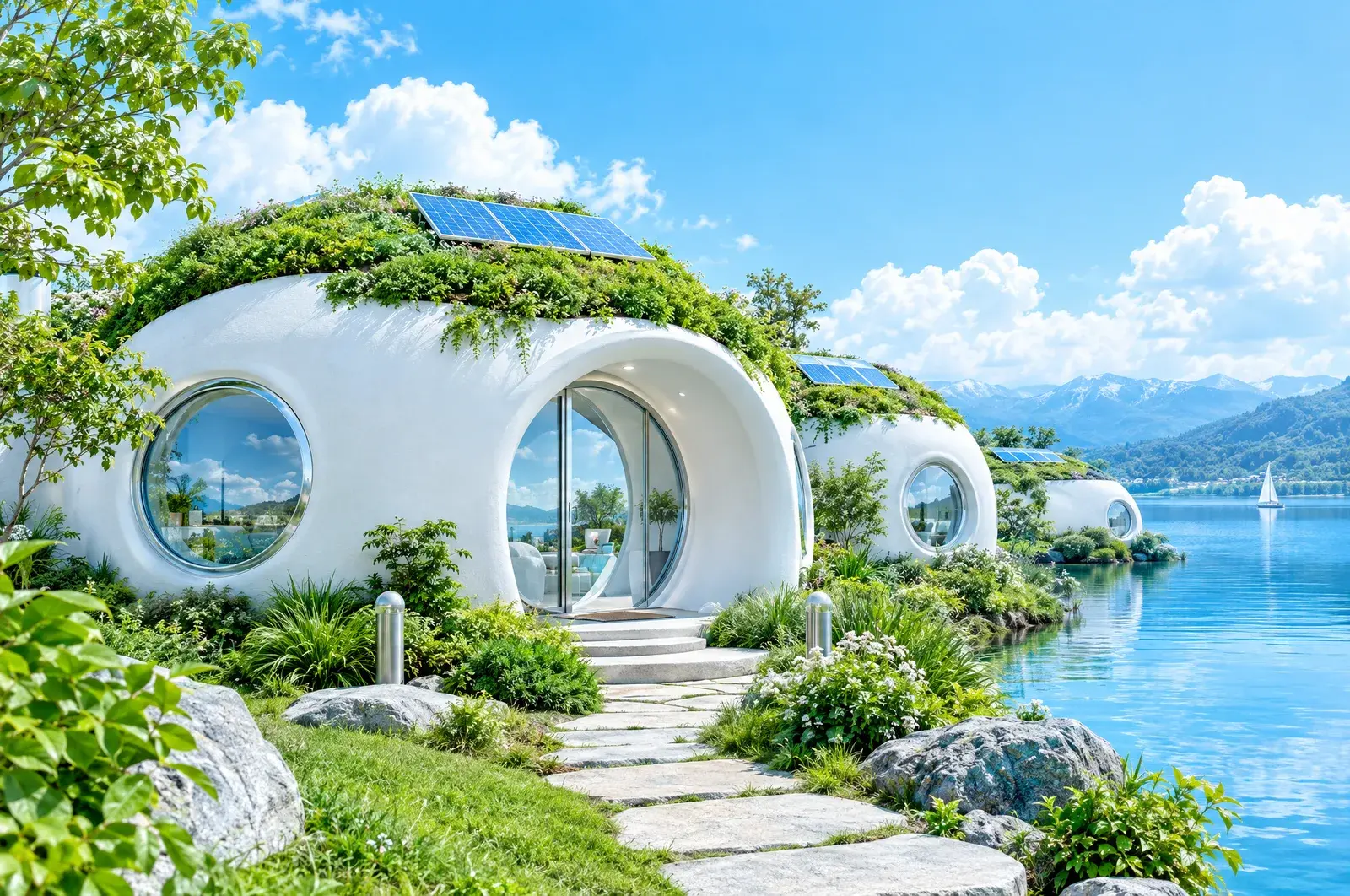 The future
Building with earth: cob, rammed earth, hempcrete and the Brighton Earthship
Around a third of the world's people live in homes made partly or wholly of earth. Here is how earth building works, what it is good and bad at, what the UK's first Earthship shows, and where it fits in a modern home.
5 min read