
Solar is now the cheapest electricity we have ever made: the numbers, and their limits
Solar power fell about 90% in cost between 2010 and 2024, and in 2025 renewables overtook coal for the first time in a century. Here are the checked numbers, what they mean, and what they do not.
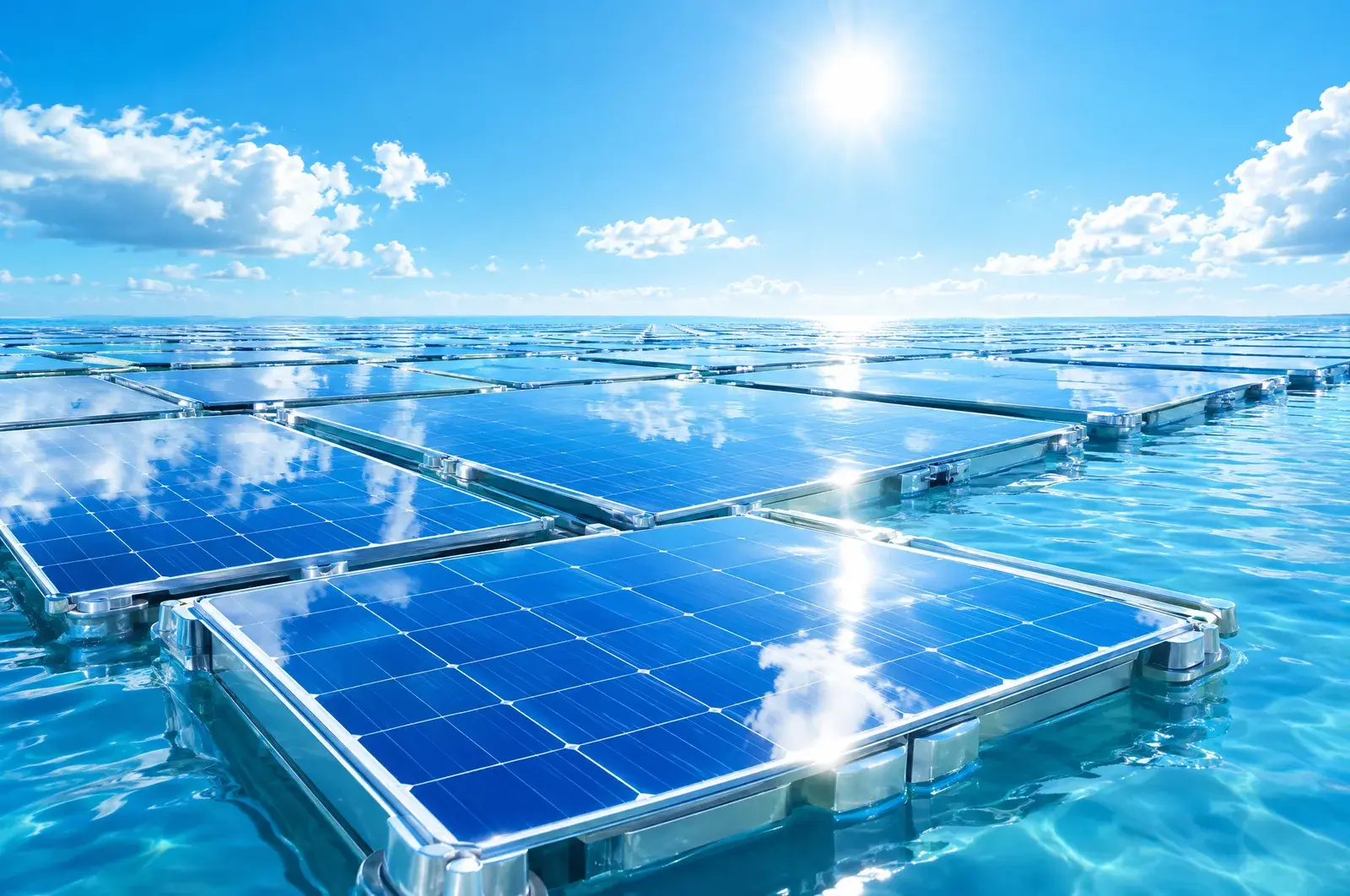
In this story
The cost of electricity from new solar farms has fallen by roughly 90% since 2010, and in 2025 the world got more of its electricity from renewables than from coal for the first time in a hundred years. Both statements are true, and both need a careful reading.
I am going to give you the numbers with their sources, then tell you what they leave out. This is the one topic on this site where I most want you to be able to check my work, because it is easy to be told a comforting story about energy and just as easy to be told a frightening one.
The cost curve
The International Renewable Energy Agency (IRENA) tracks what it costs to generate a unit of electricity from each source. Its 2025 report on renewable power generation costs in 2024 found:
- The global average cost of electricity from utility-scale solar was $0.043 per kilowatt-hour in 2024.
- That is about 90% lower than in 2010, when it was about $0.417.
- The total installed cost of utility-scale solar projects fell about 87% over the same period.
- Onshore wind, at $0.034 per kilowatt-hour, was slightly cheaper still.
- Between 2023 and 2024 the cost of solar was flat, up 0.6%, after a 12% fall the year before. So the decline is not a straight line.
These are summarised by pv magazine, which is a good readable source.
The International Energy Agency reached a related conclusion earlier. In its 2020 World Energy Outlook it said that, for projects with low-cost financing and good sun, solar PV was the cheapest source of electricity in history, and cheaper than coal and gas in most major markets.
What actually got built
Cost is one thing and use is another. Ember, an independent energy think tank, tracks how much electricity the world actually generates from each source.
For 2024, its Global Electricity Review 2025 reported that solar produced 6.9% of the world's electricity, that it was the biggest source of new electricity for the third year running, and that it had grown about 29% in a year.
For 2025, its 2026 review reported:
- Renewables provided 33.8% of global electricity. Coal provided 33.0%. Ember describes this as the first time in 100 years that renewables overtook coal.
- Wind and solar together provided 17.3%.
- Solar grew by a record 636 terawatt-hours, about 30%, and met roughly 75% of the growth in global electricity demand.
- Total electricity from fossil fuels fell slightly, by about 0.2%.
That last point matters more than it sounds. For the first time in a long time, the world added new demand without adding fossil generation to meet it.
Why the price fell
Solar power got cheaper for the same reason phones and flat-screen TVs did: manufacturing at huge scale, better designs, and competition. Each time the world doubled the number of panels made, the cost per panel fell by a roughly fixed fraction. That is called a learning curve, and it has held for solar for decades. Unlike a fuel, a panel does not have to be bought again every day, so once it is built the running cost is very low.
What the numbers leave out
This is the honest half of the story, and it is where cheerful articles usually stop.
- "Cost of generation" is not the same as your bill. The figure above is the cost of producing a kilowatt-hour at the plant. Your bill also pays for grids, storage, backup, taxes, and the retailer's margin. That is why cheap solar has not made household bills fall by 90%.
- The sun does not shine at night. Solar needs storage or other generation to fill the gaps. This is a real cost that the simple figure does not include.
- Batteries are getting cheaper too. BloombergNEF reported in December 2025 that lithium-ion battery pack prices fell to a record low of about $108 per kilowatt-hour, and that packs for stationary storage fell to about $70, roughly 45% lower than the year before. Overall, pack prices have fallen about 93% since 2010. You can read its summary. That is why storage is now part of the conversation, not a footnote.
- Grids are the bottleneck in many countries. New solar and wind farms can wait years for a connection, and that is a planning and investment problem, not a technology problem.
- Averages hide differences. The cost depends on how sunny a place is and how expensive money is there. A solar farm in a sunny, well-financed country is much cheaper per kilowatt-hour than the same farm somewhere sunless with high interest rates.
- Solar is still only a share. At 6.9% of world electricity in 2024, and electricity being only part of total energy use, there is a long way to go.
Reading this without being misled either way
I try to hold two thoughts at once. The trend is real and it is faster than almost anyone forecast, so pessimism that ignores it is not looking at the data. And the trend does not build itself: it needs grids, storage, permits, workers and money, so cheerful stories that skip this are not looking at the data either.
If you want a simple rule, treat any single figure about energy as a starting point. Ask where it comes from, what it measures and what it leaves out. I try to do that here, and you are welcome to hold me to it.
What it means for a normal household
The change that matters most for most people is not a solar farm in a distant desert. It is that home-scale solar and batteries are becoming ordinary. In the UK, small plug-in kits are now legal, and I explain what that means in plug-in solar and home energy. For the bigger picture of how this fits with cities and buildings, start with what is solarpunk.
Follow the numbers with me
If you would like to talk about this with people who like checking sources and building things, the ADHD MindFlow community is a good place. And if you find that reading about energy leaves your mind racing, a few minutes with one of the listening sessions is a low-effort way to reset before you carry on.
A personal view, with sources linked so you can check the numbers yourself. Figures are as reported by IRENA, the IEA, Ember and BloombergNEF at the dates given.
Personal view, with sources linked so you can check the numbers yourself. Read our sources, commercial disclosure and editorial approach.
Follow your curiosity.
 Energy & home
Plug-in solar is now legal in the UK: what it is, what it can do, and what to check first
Since 27 August 2026 small plug-in solar kits can be sold and used in the UK. Here is what the government says they can save, the rules that apply, and a sensible checklist before you buy one.
6 min read The future
What is solarpunk? The optimistic future, and what is already real
Solarpunk imagines a future where clean energy, nature and community fit together. It began as a 2008 blog post and became an art, fiction and design movement. Here is what it means, what is already real, and where it falls short.
5 min read Nature & technology
Living with AI as a friend, not a threat: what harmony would actually take
I believe AI can be one of the best companions humans have ever had. I also do not know how it will go, and neither does anyone else. Here is my honest view, what the evidence says, and the habits that keep it a friend.
6 min read